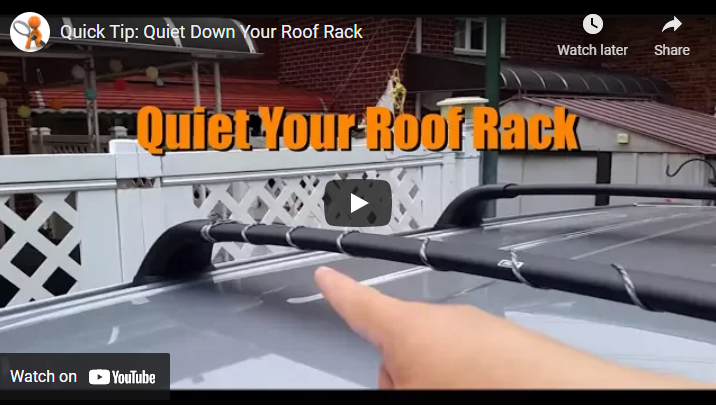
Here’s the Answer: Make sure to properly position the roof box on your vehicle’s roof rack. Optimal placement is necessary to find that sweet spot that reduces wind resistance.
You can also use wind deflectors that significantly cut down air turbulence, but make sure to invest in high-quality deflectors that are specific to your roof box model.
Of course there are other alternative options and we will dive into those but first let’s understand what’s causing the wind noise and if it’s possible to eliminate it totally.
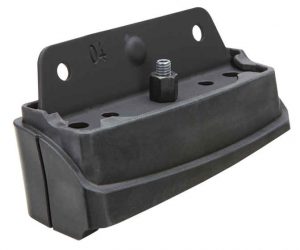 The fit kit, which you’ll need to purchase if you have a flush roof that comes with no factory roof rack or built-in gutters. If you do have these items on your vehicle, you won’t need to purchase a fit kit. If you purchase one, however, keep in mind that they are specific to your vehicle and are not universal.
 The towers, which are attached to the fit kit and are universal. These are the items that keep your gear from flying away while you’re driving.
 The crossbars, which hold everything together and can be circular, aero, or square. Square bars are the least expensive kind, but can also make the most noise since they aren’t aerodynamic; circular bars are a happy medium between square and aero bars; and aero bars, although they are the most expensive, provide the best results: less noise, better fuel efficiency, and a more attractive design.
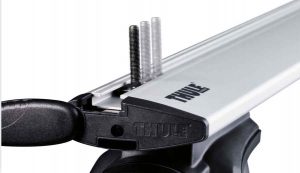 T-track adapters: these adapters spread your load and, therefore, cut back on noise; they can even be used with aero crossbars and look sleek once they’re installed.
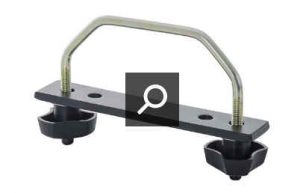 U-bolts: these are universal and can be used with all types of roof boxes; however, they are not usable with aero bars and they can sometimes scratch bars made of softer aluminum.